
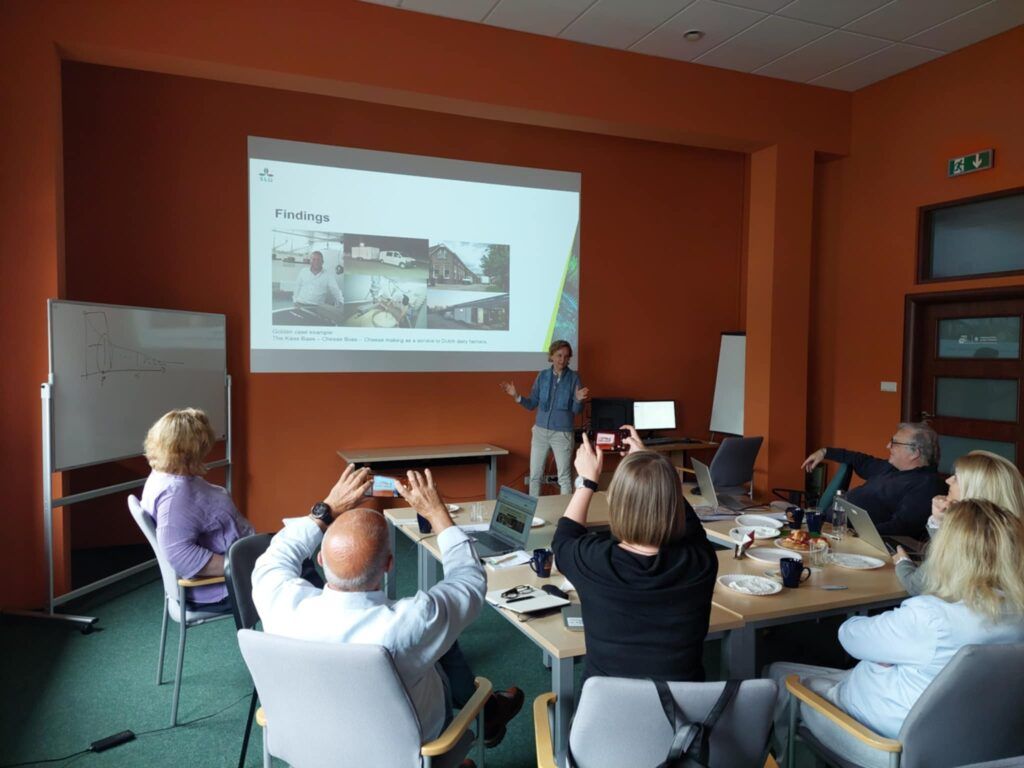
On July 9–13, 2025, a series of events of the SFSC4foodsecurity networking project entitled “Integration of Short Food Supply Chains for Ensuring Food Security” took place in Krakow. The program included seminars, discussions, and meetings with city authorities, project partners, and representatives of the local food sector, as well as visits to local best practices of short food supply chains.
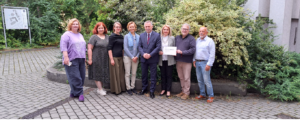
The events were attended by Aušra Žliobaitė, Head of the Cooperation and Economics Department of the Lithuanian Chamber of Agriculture.
The events are part of the project “Organizational and IT-Supported Models for the Growth of Local Food Markets to Ensure Food Supply in the Baltic Sea Region and Ukraine” (SFSC4FOODSEC), funded by the Swedish Institute. The project aims to create a learning and support network for those developing short food supply chains (SFSC) in local markets in the Baltic Sea region and Ukraine, with the goal of sharing experiences, building capacities, and developing joint IT support mechanisms to promote stable and resilient food systems.
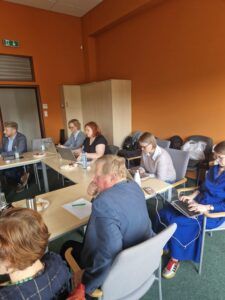
The event of the first day of meetings was attended by Aušra Žliobaitė from the Chamber of Agriculture (Lithuania), Prof. Vilma Atkočiūnienė from Vytautas Magnus University (Lithuania), Aiva Apsa Kisemice from the Rural Development Forum (Latvia), Lisa Blix Germundsson from the Swedish University of Agricultural Sciences (Sweden), First Deputy Mayor of Krakow Stanisław Mazur, Head of the Krakow “Jednosc” Foundation, whose main activity is to organize educational activities for children and adolescents of Ukrainian refugees and to build stronger Polish-Ukrainian relations, Olena Postolnyk, expert of SFSC Rafał Serafin from “IsoTech” (Poland), and Krzysztof Gorlich, Head of the Krakow Inter-institutional Working Group, which is preparing the Krakow Development Strategy 2030/2050. One of the
Krakow Development Strategy areas is the development of short food supply chains and food security.
In the context of the future of EU agriculture, Poland’s agricultural sector stands out for its highly fragmented farm structure, resilience to global crises, and still untapped potential for the development of short food supply chains (SFSC).
Poland has more than 1.3 million farms, making it the second-largest in the EU in terms of agricultural labor force. However, the majority of these farms are very small: 75% are under 10 hectares, and almost 72% are no larger than 5 hectares. This demonstrates that the country’s agriculture is predominantly made up of family-run farms, often part-time, which sustain rural economies and cultural traditions.
Small farms make a significant contribution to national production, particularly in the dairy, cereal, poultry, and horticultural sectors. These farms generate considerable added value and occupy more than half of the country’s agricultural land. However, their small scale limits their bargaining power in traditional value chains, as intermediaries often capture most of the profit, leaving farmers vulnerable to price fluctuations and market pressures.
Farmers’ position is further complicated by the effects of climate change—for example, frosts and droughts can significantly reduce cereal yields. Geopolitical factors, such as competition with imported grain, also at times spark protests among farmers.
The aging farming population and rural depopulation pose a threat to the long-term sustainability of the small-farm sector.
To address these challenges, short food supply chains (SFSCs) are emerging as a promising organizational and business model that enables small farms to remain competitive in the marketplace. SFSCs reduce dependence on intermediaries, increase profit margins, and strengthen the ties between producers and consumers.
Despite a farm structure that is, in principle, favorable for SFSC development, only a small share of Polish farmers engage in direct-to-consumer sales. Although consumer behavior is changing—with growing interest in locally produced food and most buyers prioritizing product quality and origin—this demand is still largely met by supermarket chains, which emphasize “local food” marketing, while the actual scale of direct sales grows only slowly. The main obstacles remain logistics, limited awareness, and regulatory barriers that hinder expansion.
Currently, SFSCs in Poland are recognized as potential enhancers of sustainability, equity, and food security. They help organize, strengthen, and restore localized food systems in which direct producer–consumer connections are prioritized.
In the policy context, the CAP Strategic Plan and national sustainable rural development strategies provide the foundation for agricultural transformation. These outline directions aimed at revitalizing rural areas by promoting SFSCs, organic farming, and modernization. Initiatives include the expansion of organic land, support for small and medium-sized farms, and the introduction of digital tools to improve the efficiency of supply chains.
From an environmental perspective, SFSCs help reduce transport distances, encourage agroecological practices, and lower emissions. Regional projects have shown that local food systems can increase farm income, strengthen biodiversity, and at the same time reduce negative environmental impacts.
Economically, SFSCs allow small farms to bypass intermediaries and retain a larger share of profits. Digital platforms and IT solutions that automate logistics coordination and payment systems help reduce transaction costs for both farmers and consumers.
For example, community-supported agriculture, as well as the promotion of food democracy.
Despite all its potential, local markets based on SFSCs in Poland still remain peripheral. Many challenges persist in terms of scaling up and replicating models. The regulatory environment more often favors industrial agriculture, while fragmented logistics limit expansion opportunities. Digital projects aim to address these issues, but the low level of digital literacy among small farmers continues to be an obstacle.
Poland’s strategic documents envision a sustainable agriculture by 2035–2040, one that ensures food security, high animal welfare, environmental protection, and strong local communities. To create ideal conditions for the development of short food supply chains, it is necessary to simplify legal requirements for small producers, channel funding into infrastructure, implement technological innovations, foster partnerships among farmers, NGOs, and policymakers, and educate consumers about the benefits of local food.
Well-functioning short food supply chains can not only improve farmers’ incomes but also contribute to food sovereignty, the green transition, and the development of community-based, sustainable agriculture.
At the meeting, Deputy Mayor of Krakow Stanisław Mazur stressed the need to clearly define the role of the SFSC in the city’s strategy. Several key aspects were highlighted:
- Creating local demand – public procurement (especially for schools and public institutions) could become a key tool to encourage local farmers to produce food products.
- Revitalizing markets and food markets in the city of Krakow and its suburbs – they can become an alternative to retail chains and contribute to the creation of vibrant public spaces.
- Strengthening food infrastructure – it is necessary to improve logistics, warehousing, and develop digital platforms that would allow producers to reach consumers directly.
- Partnership management – a successful local food policy is only possible in cooperation with regional governments, farmers, universities, NGOs and business representatives, and consumers.
Ukraine’s experience shows that, in times of crisis, local community food production is a key condition for resilience. Local authorities there have demonstrated that decentralized food policy can become part of national security. These lessons are highly relevant for Kraków and the Baltic region.
Food security cannot be taken for granted – it is essential to preserve agricultural land, support small-scale farming, and strengthen local production. Public procurement (especially for schools and other institutions) can serve as a major tool for creating demand for local products.
The development of short food supply chains requires modern food infrastructure (logistics, IT solutions, and the revitalization of urban markets) so that producers can directly reach consumers. Local authorities should act as enablers of food system transformation – fostering cooperation among farmers, communities, businesses, NGOs, and academia.
Anatoly Tkachuk from the Ukrainian Institute of Civil Society presented an important experience. According to him, during the war it became clear that well-developed local production is not a luxury, but a vital necessity. Although millions of tons of grain and warehouses were destroyed, fields were mined and logistics infrastructure was destroyed, Ukraine did not experience hunger. Local communities, municipalities and small farmers developed gardens, community initiatives, created local food markets and thus ensured food supply. This experience shows that food sovereignty is inseparable from national security. This is a signal for Krakow to prepare for possible supply disruptions that may arise not only due to war, but also due to climate change or pandemics.
Aiva Apša-Ķīšeniece, a specialist in resilience and sustainable at the Latvian Rural Forum, noted that Riga is one of 116 cities whose representatives have signed the Milan Urban Food Policy
Pact (MUFPP) – an agreement that commits to developing food policies and sustainable food systems that are inclusive, flexible, safe and diverse, provide healthy and nutritious food for all, reduce poverty, conserve and preserve biodiversity, while adapting to and mitigating the effects of climate change.
The leader of the project “Organizational and IT-supported models for growing local food markets for food security in the Baltic Sea Region and Ukraine” (SFSC4FOODSEC), prof. dr. Lisa Blix Germundsson from the Swedish University of Agricultural Sciences (SLU), Competence Center for Advisory Services, presented the project results, shared the experience and research results of Swedish short food supply chain developers.
Rafał Serafin from IsoTech (Poland), a network of short food supply chain consultants CORONET, presented the features of the APPETIT platform. He noted that there are opportunities to develop SFSC and national innovations at the regional level through closer cooperation. The alignment of CAP strategic plans could open up synergies in funding and policy implementation, and the proposed Baltic food and drink store network under the SFSC4FOODSEC initiative provides a platform for knowledge exchange and joint articulation of positions. The emerging model of urban-rural partnership in Krakow is a prototype that could be adapted across the region, especially if supported by the EU Urban Agenda funding mechanisms. The current food security crisis, highlighted by the resilient informal networks of Ukraine, is both a challenge and an opportunity to position food and drink sales as essential components of crisis-responsive food systems.
Prof. V. Atkočiūnienė noted that preschool institutions in Lithuania are encouraged to feed children with organic and local products of national quality. A national program implemented since 2019 supports such feeding, and in recent years the support has increased both in financial volume and in the number of participating kindergartens. The support compensates for the price differences between intensively grown and organic and national quality products and is allocated to preschool institutions, which purchase most of their food according to quality systems.
The Lithuanian food market is dominated by large retail chains, which control about 77% of the total market, while local farmers often do not have direct access to the large market. As a result, small and medium-sized farms experience low profitability, have weak bargaining power and do not pool resources. Consumer trust in local products also remains low. Consumer demand for health-friendly, locally grown products is often unsatisfied.
In order to address these problems, it is recommended to promote farmer cooperation, increase the value of local products, form healthy eating habits, encourage the public sector to purchase local food products, and increase the purchasing power of the population and the availability of health-friendly products.
The organization of short food supply chains (SFSCs) can result either from private farm-level decisions or from partnerships between the public sector and civic initiatives. The current situation is characterized by a narrow range of local products, high production costs, low levels of farmer entrepreneurship, and limited contribution to strengthening local economies.
An ideal local food system in Lithuania would be network-based, encompassing the entire process – from farming, processing, and sales to consumption and waste management. It would rely on diverse business models (B2C, B2B, B2G), integrate both cooperative and individual farm SFSCs, and foster pilot projects as well as initiatives grounded in stakeholder participation. Planning supply chains would take into account product concentration, geographic location, population density, and infrastructure.
Transition toward the ideal model could take place through community-based systems, multifunctional centers, or food-sharing hubs, where farmers would coordinate the marketing, distribution, and partial processing of fresh local products before delivering them to consumers or wholesalers.
Discussions with project partners revealed that the main barriers to SFSC development in Poland and the Baltic states include the dominance of large retail chains, insufficient infrastructure, entrenched consumer habits, and fragmented policies.
In discussions with representatives of Kraków’s food sector, the following agreements were reached:
• to regularly organize meetings of food system stakeholders;
• to preserve agricultural land and integrate it into urban planning;
• to recognize local food infrastructure (markets, logistics centers, farmers’ shops) as critical infrastructure;
• to expand public procurement and direct sales channels for local farmers;
• to encourage joint Polish–Ukrainian initiatives.
These recommendations will become part of Kraków’s development strategy, with the final document expected to be approved by the end of 2025.
During the last two days of the meeting, project partners visited examples of good practices, discussed innovations implemented by SFSC developers, policy
SFSC4FOODSEC the project is funded by the Swedish Institute