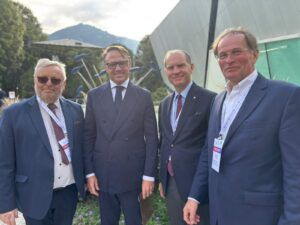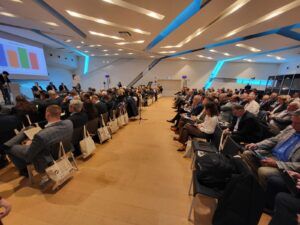
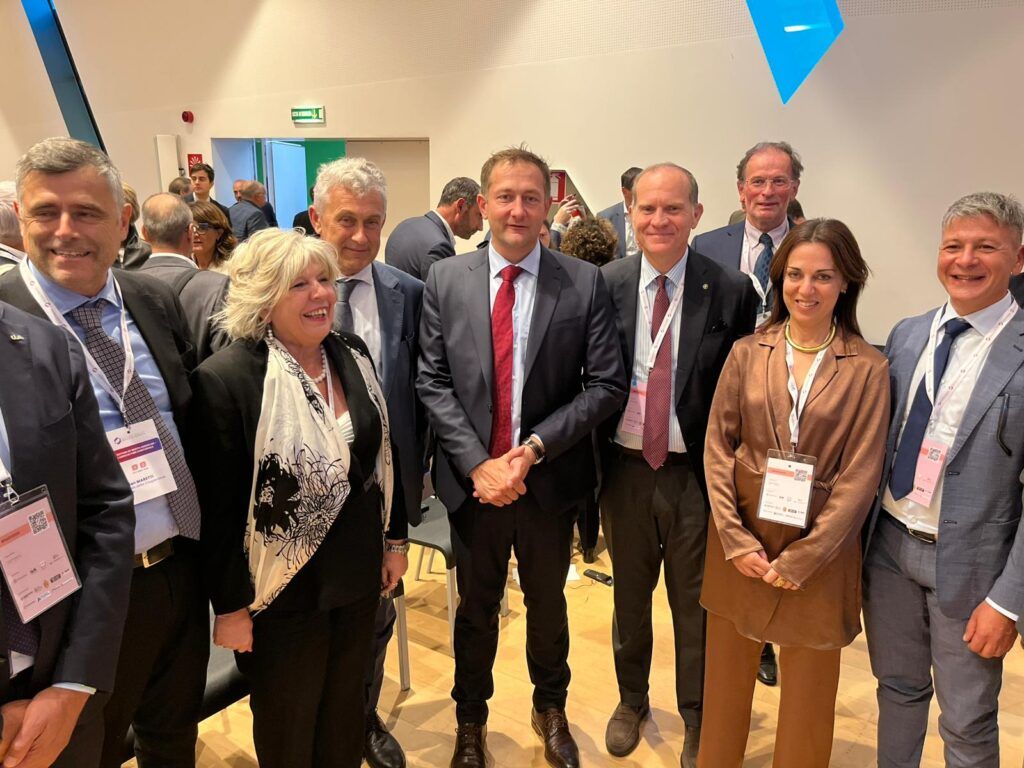
On October 1–2, the President of the Chamber of Agriculture of the Republic of Lithuania (ŽŪR), Dr. Arūnas Svitojus, is taking part in the North America–European Union Agriculture Conference, held in Como, Italy.
“The conference is taking place at a crucial moment for transatlantic relations, as many policy areas important for the agricultural sector on both sides are undergoing significant changes. Therefore, the discussions here will be of great benefit to farmers, agricultural cooperatives, and their organizations. This is already the 41st conference, bringing together agricultural leaders, policymakers, and experts from around the world. Considering the increasing challenges of climate change, energy costs, labor shortages, and the availability of essential resources, the conference seeks to find common solutions that will help ensure the sustainability, competitiveness, and resilience of the agricultural sector. At the same time, it is a great opportunity to strengthen transatlantic cooperation. In a rapidly changing global context, agricultural leaders from Europe and North America are meeting to address common challenges, explore new opportunities, and foster partnerships that support sustainable and resilient agricultural systems. The conference brings together more than 250 representatives from EU Member States as well as from Canada, Mexico, and the United States. It is both useful and interesting to discuss the challenges and opportunities of the agricultural sector,” emphasized Dr. Svitojus.
The North America–European Union Agriculture Conference is organized every two years in cooperation between Copa and Cogeca, the American Farm Bureau Federation, the Canadian Federation of Agriculture, and Mexico’s National Agricultural Council. This year’s event is hosted by Copa-Cogeca in collaboration with four major Italian agricultural organizations: Confagricoltura, CIA – Agricoltori Italiani, Coldiretti, and Alleanza delle Cooperative Italiane.
Thematic sessions of the conference focus on key topics of the agricultural sector:
-
Trade and geopolitics between North America and the EU. Discussions cover trade relations between the US, Canada, Mexico, and the EU, with attention to tariff policies, biotechnology, and climate-friendly policies.
-
Digitalization and data use in agriculture. Led by the Canadian Federation of Agriculture (CFA), the session addresses the need to build strong data ecosystems, tackle ownership, interoperability, and digital infrastructure challenges, while stressing the importance of international cooperation.
-
Work in agriculture: social dialogue and working conditions. Initiated by Copa and CAN (Mexico’s National Agricultural Council), the discussion emphasized the importance of social protection, seasonal work, migration, and improving working conditions, highlighting good practices in social dialogue and responsible business.
-
Geopolitical tension and multilateral trade. Analysis of the impact of inflation, war, and trade barriers on food supply chains, and discussion of policy tools that can help the sector adapt to an uncertain environment.
-
Technologies and innovations for sustainability. Debates focus on integrated pest management (IPM), promoting scientific research, and climate change mitigation measures, stressing the need to balance environmental, social, and economic aspects.
-
Consumer behavior and market changes. Examination of shifting consumer expectations, the rising demand for alternative proteins, product labeling, and digital traceability, and how policymakers can align consumer needs with farmers’ realities.
-
Strengthening the resilience of agricultural systems. In the concluding session, led by Sarah Brown (BASF), concrete proposals are presented for risk management, crisis prevention, and strengthening food supply chains.