Towards More Sustainable Dairy Farming – From Scientific Knowledge to Practical Solutions
Dr Edvardas Gedgaudas delivered a presentation entitled “Towards Sustainable Dairy Farming: Practical Approaches to Reducing GHG Emissions.”
The topic of his presentation reflects one of the most pressing challenges facing modern livestock farming: how to reduce agriculture’s impact on the climate while maintaining farm productivity, economic viability and competitiveness.
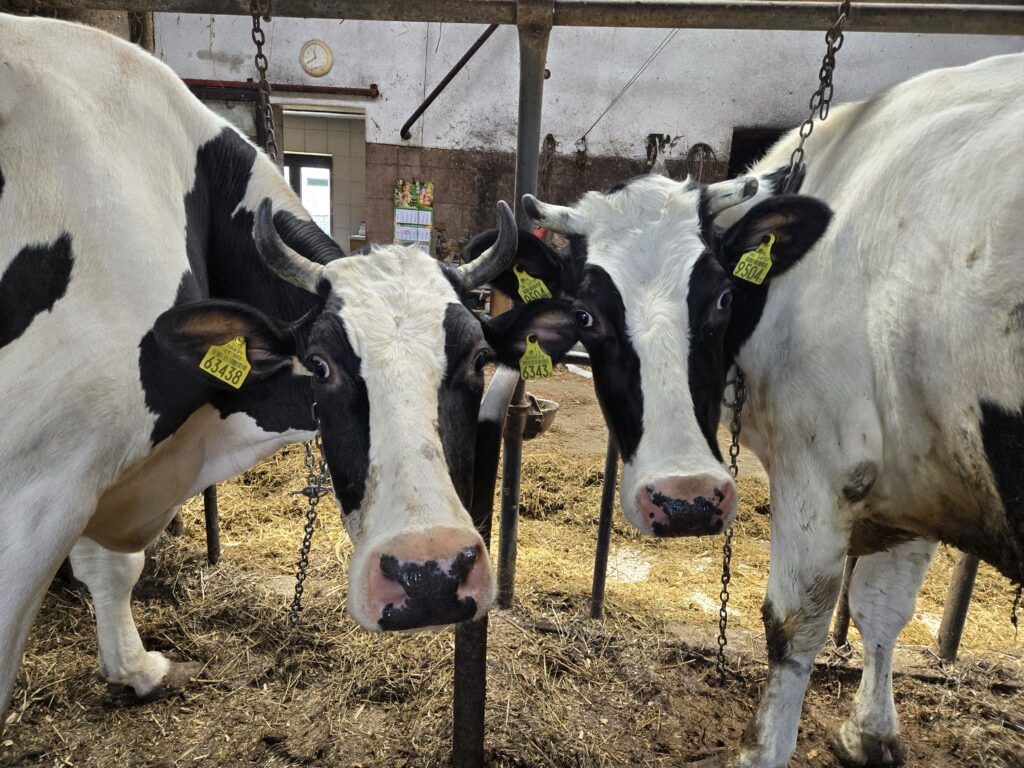
In the dairy sector, sustainability is closely linked to efficient resource use, animal health, feed quality, proper manure management and advanced farming technologies. These areas are essential when identifying practical solutions to reduce greenhouse gas (GHG) emissions.
Dr Gedgaudas is a livestock specialist with extensive practical and scientific experience. He has served as Director of the Lithuanian Cattle Breeders Association since 2004. He advises cattle farmers, delivers practical training and contributes to livestock research and the implementation of innovations.
Participation in international training events provides an opportunity to share the expertise of Lithuanian specialists with a wider European audience and to engage in discussions about the future of sustainable livestock farming.
International Experts Focus on Four Key Areas of Livestock Farming
The VITAL project training session entitled “Cattle & Buffaloes,” held on 9 November, brought together specialists from various fields to address technological, environmental and animal health issues in the livestock sector.
Lucia Trapanese, a researcher at the University of Naples Federico II in Italy, presented the application of digital technologies and deep learning in cattle and buffalo farming, discussing current technological applications and key research findings.
Dr Edvardas Gedgaudas addressed sustainable dairy farming and the reduction of greenhouse gas emissions.
Domenico Vecchio, an expert from the Italian animal health research institution IZSM, discussed biosecurity in ruminant livestock farming, highlighting the main challenges and factors that support the implementation of biosecurity measures.
Sophie Aylmer, a policy expert at the international animal welfare organisation FOUR PAWS Europe, addressed improvements in cattle welfare, emphasising the links between animal welfare principles, policy and practical implementation.
This combination of topics demonstrates that progress in modern livestock farming depends not on isolated solutions, but on a comprehensive approach encompassing technology, environmental protection, animal health and welfare.
ŽŪR’s Participation in the VITAL Project – Strengthening Knowledge Sharing and Innovation
The participation of the Chamber of Agriculture of the Republic of Lithuania (ŽŪR) in the international VITAL project plays an important role in strengthening cooperation with European partners and creating opportunities for Lithuanian agricultural specialists to share their expertise.
Projects of this kind foster interaction between research, advisory services and practical farming. For farmers, it is particularly important that the latest knowledge and innovations are not only presented in scientific discussions but also applied in everyday farm operations.
ŽŪR aims to ensure that the knowledge gained through international cooperation contributes to the modernisation, sustainability and competitiveness of Lithuania’s livestock sector.
Dr Edvardas Gedgaudas’ participation in the VITAL training event is an example of the involvement of Lithuanian livestock experts in the international exchange of knowledge and experience.
About the VITAL Project
VITAL is a project co-funded by the European Union, whose training activities address key issues facing the livestock sector.
The first online training session, held on 9 November 2026, focused on cattle and buffalo farming. The session covered digitalisation, sustainability, biosecurity and animal welfare.
The Chamber of Agriculture of the Republic of Lithuania participates in the VITAL project, contributing to international cooperation and the dissemination of knowledge within the livestock sector.