
The Copa–Cogeca Women’s Committee has published the results of its 2025 survey “Women in Agriculture and Their Access to Finance.” A total of 894 women from EU member states responded, with Lithuanian farmers and rural entrepreneurs among the most active participants.
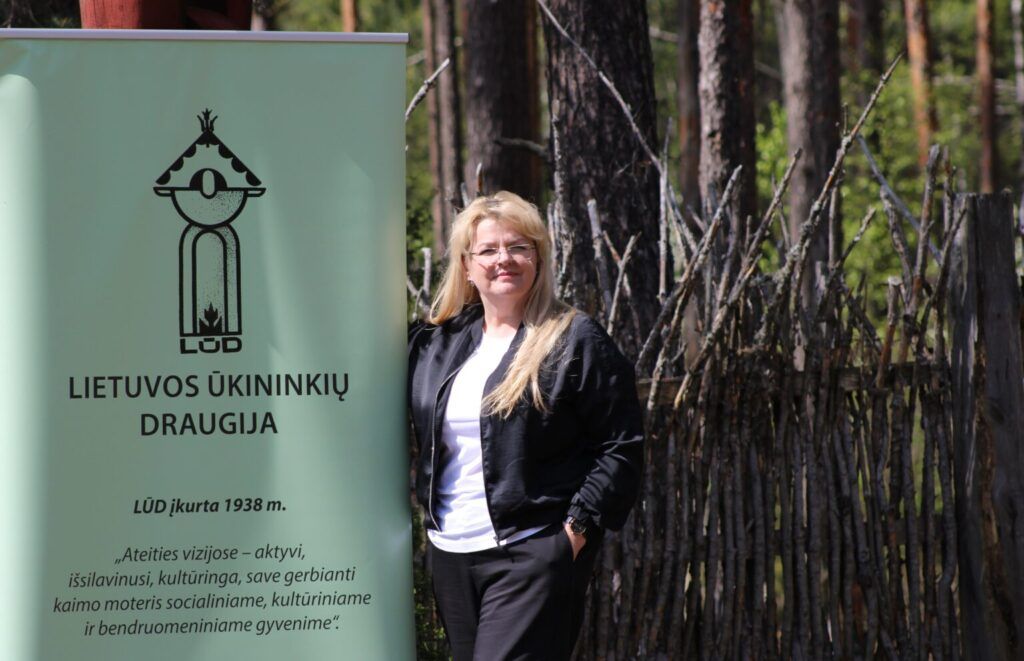
“Our women are not only hardworking – they are highly conscious and engaged. Their active participation shows that they are not afraid to speak about problems and are ready for change. That is why it is important to assess these results and present them in Lithuania, rather than allowing them to become just another ‘European document’ left in a drawer,” says Algimanta Pabedinskienė, Chair of the Lithuanian Women Farmers’ Association (LWFA).
Most responses came from women in Italy, Lithuania, Austria, France, and Spain – making these countries the main reference points in the comparison.
Women Make Farm Decisions – But Are Not Always Masters of Their Own Income
One of the most striking findings is the high level of women’s leadership on farms:
88% of respondents participate in decision-making, with
-
60% acting as equal partners, and
-
28% as primary decision-makers.
However, leadership does not guarantee financial autonomy.
Although around 75% of women work full-time on farms, nearly half receive no remuneration at all, and fewer than half report having regular income.
“These numbers say it all: women are effectively running farms, working from early morning to late evening, yet legally and financially they remain ‘invisible’. This means no official salary, no social guarantees, and no credit history. Without these, women are not equal players in the financial system,” stresses A.Pabedinskienė.
She notes that this is especially true in family farms, where women’s contributions are often seen as “naturally expected” and therefore not formalised:
“As long as women’s work is treated as ‘help’ rather than full professional activity, we cannot talk about equality – only about decorative declarations. This survey makes that painfully clear.”
Access to Credit: Uncertainty, Barriers, and Frustration
The study also highlights the complex challenges women face when seeking financing.
About one-third of respondents believe that being a woman negatively affected their chances of obtaining credit. Others disagree or are unsure – a sign of widespread uncertainty and mistrust in the financial system.
Only one quarter of women said obtaining credit was easy.
Most answered that it was difficult to assess the situation at all, pointing to limited financial literacy and a lack of information.
“For many women farmers, the financial system resembles a closed fortress – full of jargon, requirements, and paperwork, and very little human explanation. A woman who works all day on the farm does not have the time in the evening to become a ‘finance specialist’. The responsibility lies not with women, but with institutions,” says A. Pabedinskienė.
According to her, three key factors strongly influence women’s chances of obtaining credit: land ownership, education, and business structure. Even with these, women still face bureaucratic barriers and stereotypes.
“If a woman is not officially listed as the farm owner, but is simply ‘helping her husband’, her access to banks or credit unions practically disappears. Yet in reality she may be the one managing accounts, administration, projects, and daily decisions. Such situations are fundamentally unjust,” she adds.
Gender Bias in Finance Remains a Reality
Only around one third of survey participants believe financial institutions treat men and women equally.
Some state directly that women are treated worse, and many others simply do not know, reflecting general mistrust and a lack of transparency.
“We often hear: ‘there is no discrimination, the rules are the same for everyone’. But the numbers show otherwise. If women struggle more to obtain credit, if they work unpaid more often, if they are not visible in public policy measures – then the system is not neutral. It is simply built more around men,” notes the LŪD chair.
She emphasises that in Lithuania, discussions about gender equality in agriculture remain rare:
“Women often downplay their role – ‘I just help’, ‘it’s the family farm’. Yet when we look at real data, we see that women are the driving force of farms. The first step is to acknowledge this reality and reflect it in policy.”
2026: The International Year of the Woman Farmer – A Chance Not Only to Celebrate, but to Transform the System
The Food and Agriculture Organization (FAO) and the UN General Assembly have declared 2026 the International Year of the Woman Farmer. This global initiative aims to highlight women’s contribution to agriculture and reduce gender inequality.
“It is an opportunity for Lithuanian authorities to look at agricultural policy through the eyes of women farmers. We must consider their voices – because they play an essential role not only in agriculture but also in rural development,” A. Pabedinskienė insists.
She adds that both the Copa-Cogeca report and the UN decision send a clear message to policymakers:
“We need not only support schemes, but also practical measures tailored to women’s needs: easier access to credit, advisory services, training, and support in formalising their work on farms. This is not a privilege – it is a prerequisite for real empowerment.”
What Lithuania Needs
Based on the survey results, A.Pabedinskienė identifies several key priorities for Lithuania:
-
Legal and transparent recognition of women’s work on farms.
“Women’s contributions must not be viewed as ‘help’, but as legitimate work with full social guarantees.” -
Financial instruments that account for gender.
More than half of respondents want dedicated financial programmes for women, and many women who own land say they would be more likely to seek financing if tools were tailored to their situation. -
Better institutional communication and accessibility.
“Many women simply do not know where to start. This means we need less paperwork and more clear, human-centred guidance.” -
Attracting young women to agriculture.
The sector has very few young women, raising concerns for the future. “If we want vibrant rural communities and modern farming, we must see young women farmers not as exceptions, but as essential.”
LWFA Calls for Partnership
The Lithuanian Women Farmers’ Association plans to use 2026 as an opportunity to strengthen women’s skills, build networks, and work with institutions to reduce financial and social barriers.
“Our goal is that after the International Year of the Woman Farmer, we can say that Lithuania not only celebrated women farmers – but actually improved their situation. Women in agriculture already do more than is often recognised. Now it is time for institutions to finally see and empower them,” concludes Algimanta Pabedinskienė.