On 10–11 June, Ramūnas Stonkus, Head of the Certification Department of the Chamber of Agriculture of the Republic of Lithuania (CARL), participated in the international FERTIBIO project event, “Organic Fertilizer Innovation: Development and Implementation in Tuscan Agriculture”, held in Pisa, Italy.
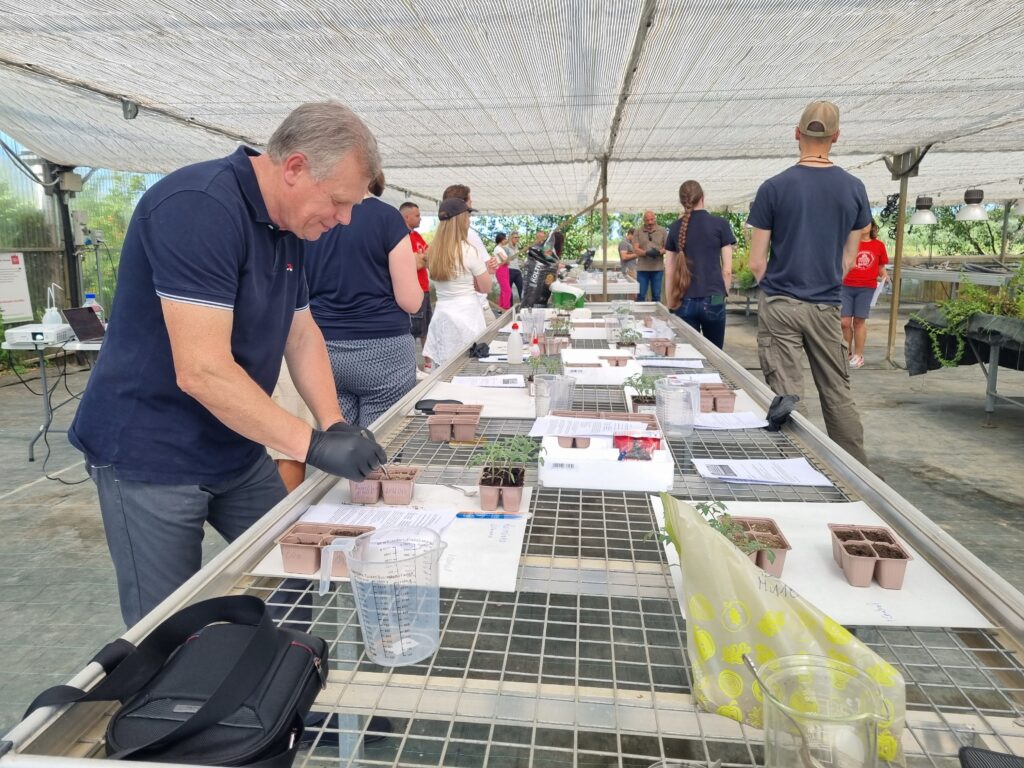
The event consisted of two parts: a theoretical session presenting the latest scientific research on the development and application of biological fertilizers, and a practical session in which participants worked in a field laboratory located on an organic farm, gaining first-hand experience with biological fertilizer production and application technologies under real farming conditions.
The FERTIBIO project, implemented in the Tuscany region of Italy, is an innovative scientific and agricultural initiative funded by the European Innovation Partnership (EIP) and the Tuscany Regional Government. The project’s objective is to develop and field-test biological fertilizers for arable crops and vegetables grown on organic farms. The initiative aims to improve soil fertility, significantly reduce dependence on mineral fertilizers, and maintain or even enhance crop quality and yields.
The project brings together Tuscan agricultural organizations, including CIA Toscana and Terretruria, as well as leading researchers from the Sant’Anna School of Advanced Studies (Scuola Superiore Sant’Anna di Pisa).
According to Ramūnas Stonkus, Head of the Certification Department at the Chamber of Agriculture of the Republic of Lithuania, the initiative represents an excellent example of how science, farmers, and agricultural organizations can work together to develop practical solutions for more sustainable agriculture.
“The FERTIBIO project demonstrated that the development and application of biological fertilizers is far more than theoretical research. Scientific knowledge is being directly translated into practice, while farmers themselves become active partners in the innovation process. Such initiatives are particularly important for reducing the use of mineral fertilizers, improving soil health, and increasing the competitiveness of organic farms,” noted R. Stonkus.
He also emphasized that Lithuania faces similar challenges and opportunities, making it important to seek solutions that enable more efficient use of biological resources, strengthen soil vitality, and promote the application of circular economy principles in agriculture.
Participation in international projects provides valuable opportunities to learn from the most advanced European experiences, establish new cooperation networks, and assess the potential for adapting innovative solutions to Lithuanian agriculture.
The Chamber of Agriculture of the Republic of Lithuania will continue to actively engage in international initiatives to ensure that Lithuanian farmers have access to the latest technologies, scientific advancements, and sustainable farming solutions.