AQUAGRI-KNOW – Bringing Innovation and Practical Knowledge to Farmers
AQUAGRI-KNOW is an international project funded by the European Union. Its aim is to help European farmers use water resources more efficiently, adapt to climate change and improve the sustainability of agricultural production.
The project focuses on collecting and organising the results of previously implemented European Innovation Partnership (EIP-AGRI) Operational Groups and other research projects, transforming scientific findings and innovative solutions into practical recommendations that farmers can apply in their everyday work.
AQUAGRI-KNOW activities cover four main areas: efficient water use, the cultivation of drought-resistant crops, improving soil–water interactions, and water reuse in agriculture.
An important component of the project is its ambassador programme, whose participants help facilitate knowledge exchange between researchers, farmers and other representatives of the agricultural sector.
Lessons from Cyprus: When Every Drop of Water Matters
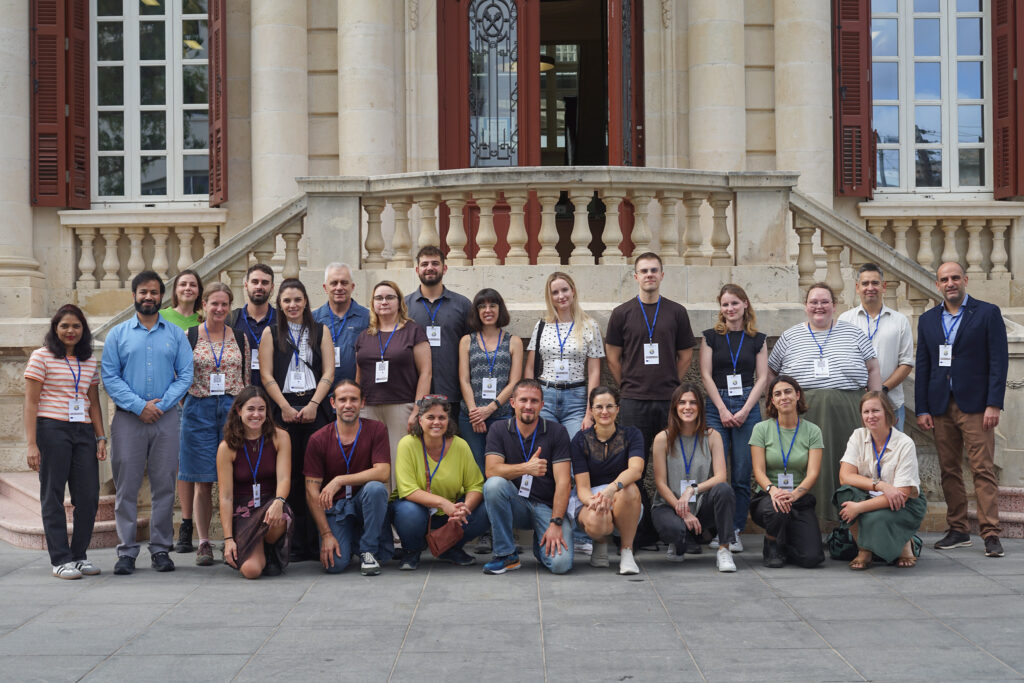
The second AQUAGRI-KNOW international study visit was held in Cyprus, a country where prolonged drought poses significant challenges to agriculture. According to the project organisers, six consecutive years of insufficient rainfall have resulted in severely depleted water reserves.
The visit focused primarily on interactions between soil, water and plants, as well as innovative approaches to water management.
One of the key sites visited was Phassouri Plantations, a citrus farm that uses advanced irrigation and plant-monitoring technologies.
The farm employs soil moisture and water potential sensors, weather stations and technologies that monitor water movement within the trees themselves. This information allows farmers to assess crop water requirements more accurately and make better-informed irrigation decisions.
One of the central lessons highlighted during the visit was that knowing how much moisture is present in the soil is not enough. It is equally important to understand how much of that water is actually available for plants to absorb.
The farm also uses treated wastewater for irrigation, helping to reduce its dependence on limited freshwater resources.
Research Highlights the Importance of Nature-Based Solutions
The study visit also featured findings from other European research projects, demonstrating how modern technologies can be combined with agroecological farming practices.
One particularly interesting example came from the GOOD project, which investigated soil management practices in olive groves. The research found that mulching is an effective way to retain soil moisture and reduce water evaporation.
Studies on soil microorganisms and mycorrhizal fungi were also presented, exploring their potential to improve plant access to water and increase drought resilience.
The experimental findings of the PATH4MED project were particularly relevant. In one grapefruit cultivation trial, a satellite data-based irrigation strategy reduced water consumption by approximately 20% compared with irrigation managed using soil sensors, without statistically significant differences in yield.
These results suggest that appropriately selected monitoring technologies and soil management practices can help farmers use water resources more efficiently without compromising agricultural productivity.
Different Climate Challenges, Shared Farming Principles
AQUAGRI-KNOW ambassador Vytenis Grigas runs a horticultural farm in Lithuania based on permaculture principles.
His farming experience began with a neglected plot of land, parts of which were regularly waterlogged and initially poorly suited to agricultural production.
Over five years, a drainage system was installed in part of the area, two ponds were excavated, and an orchard of fruit trees and other garden plants began to take shape.
While farmers in Cyprus primarily face prolonged water shortages, the initial challenge on Grigas’s Lithuanian farm was excess water. Nevertheless, the fundamental objective is the same in both cases: to manage water effectively and create favourable conditions for plant growth.
In Grigas’s view, one of the most important lessons from the visit is that technological innovation and natural processes should not be seen as opposing approaches. On the contrary, combining them can help develop more resilient and sustainable farming systems.
The Importance of International Knowledge Exchange for Lithuanian Farmers
The AQUAGRI-KNOW project aims to ensure that solutions already tested and proven effective on European farms do not remain confined to scientific reports but reach the wider farming community.
International study visits provide an opportunity to see technologies being used in real farming conditions, discuss their economic and practical effectiveness, and assess their potential for application in other countries.
The visit to Cyprus once again demonstrated that the future of sustainable agriculture depends not only on the adoption of advanced technologies but also on soil health, an understanding of natural processes, farmers’ practical experience and cooperation with researchers.
“Such international knowledge exchanges are also important for Lithuanian agriculture, where the ability to adapt to climate change, effectively manage both water shortages and excess water, and identify economically viable, environmentally responsible solutions is becoming increasingly relevant.”